Lucid Gravity robotaxi: Uber's luxury robotaxi is due this year. The permits aren't.
Lucid builds the car, Nuro writes the software and Uber sells the rides. The three companies have promised a commercial launch in the San Francisco Bay Area in 2026. With less than three months left, the rides are for Uber staff, a safety operator sits at the wheel, and the permits for a paid driverless service have not been granted.
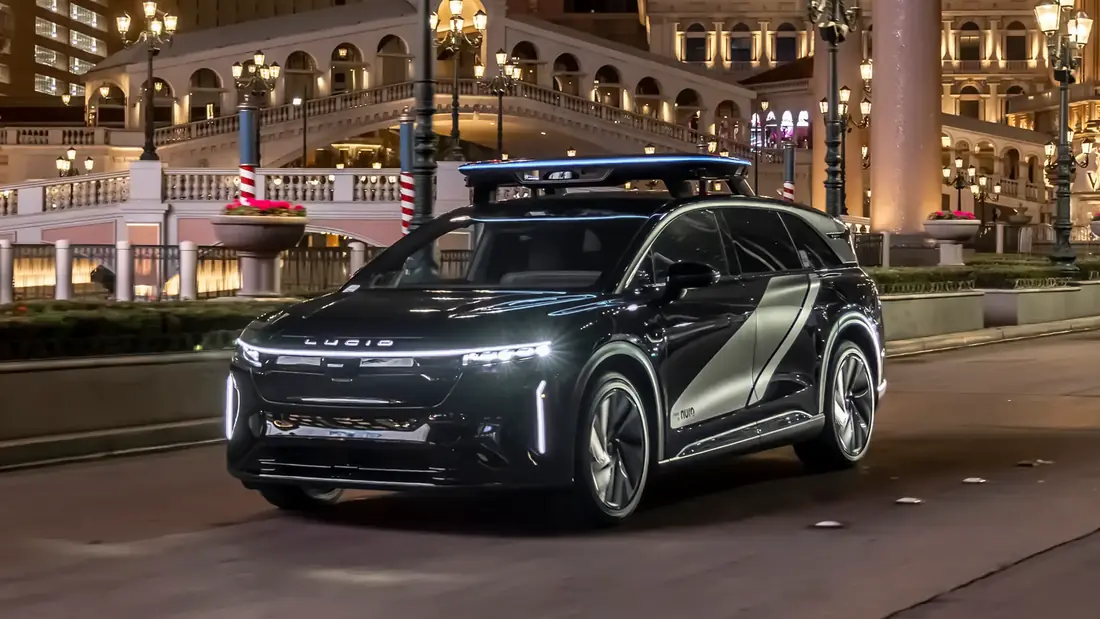
Uber's robotaxi plans have been built on other people's cars: Rivian's R2 from 2028, May Mobility's Toyota vans in Texas, Wayve's Mustang Mach-Es in London. The one it has shown off most is the Lucid Gravity robotaxi: an electric luxury SUV from Lucid, driven by software from Nuro, sold only through the Uber app. Uber has committed to buy at least 35,000 Lucid robotaxis, and the first service is promised for the San Francisco Bay Area “later this year”.
It is now mid-October. Uber employees have been riding in the cars since April, with a safety operator in the driver's seat. No public launch date, fare or waitlist has been announced. In California, a paid driverless service needs permits from two regulators, and Nuro does not yet hold the ones that matter.
The minimum number of Lucid robotaxis Uber has committed to buy (April 2026): at least 10,000 Gravity SUVs and 25,000 on Lucid's future midsize platform. The original deal, in July 2025, was for 20,000 over six years.
What it is
The robotaxi is a Lucid Gravity, the company's large electric SUV, which sells to private buyers from about $81,550. The Nuro hardware is fitted on Lucid's production line in Arizona: high-resolution cameras, solid-state lidar and radars, in the body and in a low roof module the companies call the “halo”. The computer is Nvidia's DRIVE AGX Thor. None of the three companies has published how many sensors there are, or who makes the lidar.
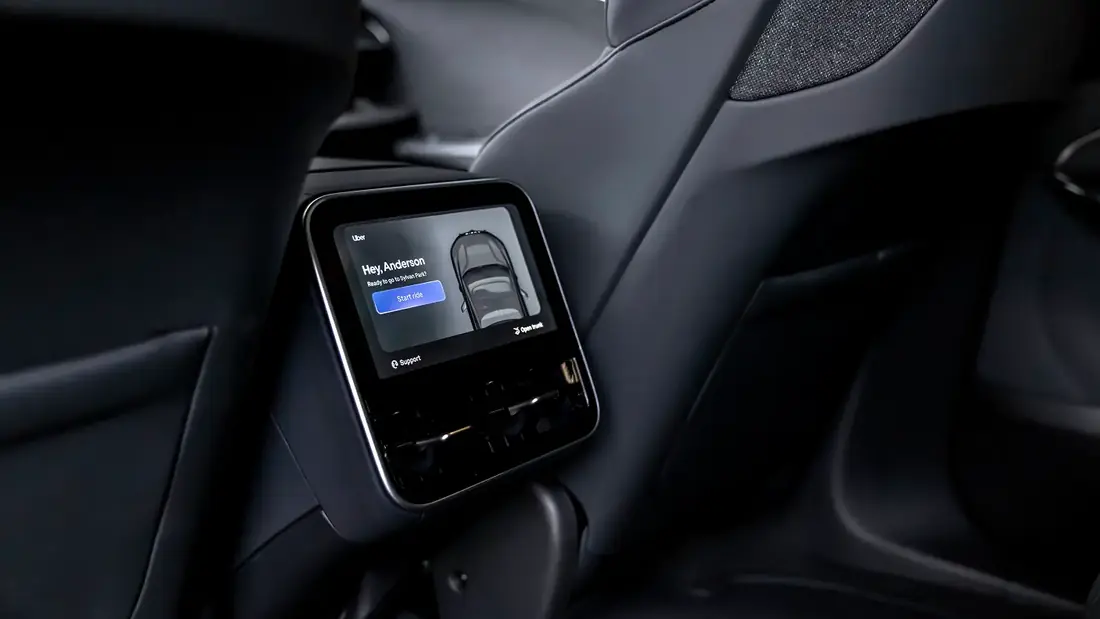
Inside, it is built for passengers. Screens front and rear let riders set the temperature, heat the seats and choose the music, contact support or ask the car to pull over, and show what the car can see and where it plans to go. The companies quote up to 450 miles of range (EPA estimate) and seating for up to six, in two- and three-row versions.
The division of labour is the point. Lucid builds and sells the vehicles. Nuro licenses its driving system, the Nuro Driver. Uber, or fleet partners it chooses, owns and runs the cars and sells the rides. It is the same “someone else's car, someone else's software” model behind most of Uber's autonomy deals.
Who is driving
Nuro was founded in 2016 by two former Google self-driving engineers. For most of its life it built small driverless delivery pods, for Kroger, Domino's and 7-Eleven among others, and in December 2020 it received California's first permit to deploy an autonomous vehicle commercially, for delivering goods. In September 2024 it stopped building vehicles and running fleets, and began licensing its software to others instead. Uber and Lucid are the only customers it has named.
Nuro says it has driven more than 2 million autonomous miles, with five years of driverless deployments and “zero at-fault incidents”. That is its own figure, and almost all of that driverless experience was in delivery vehicles with no one aboard. Nuro has never run a driverless passenger service. The Gravity robotaxi is its first attempt.
The permits
California splits robotaxi approval between the DMV, which decides where a car may drive itself, and the CPUC, which decides whether it may carry and charge passengers. Here is what Nuro holds as of October 2026:
- DMV driverless testing, covering the Gravity, in Santa Clara and San Mateo counties only, at up to 45 mph. It does not include the city of San Francisco. Nuro said in May it would begin driverless testing “later this year”.
- DMV deployment, from 2020, for goods delivery in the same two counties at 25–35 mph. It does not cover a passenger robotaxi.
- CPUC drivered pilot, granted in May 2026. It allows passenger rides with a driver aboard. Under CPUC rules, no fares may be charged on a pilot permit.
To sell driverless rides, Nuro needs a DMV deployment permit for passenger service and a CPUC deployment permit to charge fares. Neither has been announced. Waymo, which has both, runs paid driverless rides in San Francisco today. Zoox, which has pilot permits only, offers free rides there.
A Bay Area launch in 2026 is still possible. A paid, driverless one in the city of San Francisco would need approvals that have not been granted.
The carmaker
The other risk is Lucid itself. In the second quarter of 2026 it delivered 3,953 cars and lost $1.26bn attributable to its shareholders. In June it cut its US workforce, and in August it announced a $1.4bn “operational reset”. Saudi Arabia's Public Investment Fund owns about 57 per cent of the company, and in April it put in another $550m alongside Uber's, which brought Uber's total investment in Lucid to $500m. Lucid's new chief executive, Silvio Napoli, summed up the position in August: “potential is not performance.”
The robotaxi is now central to Lucid's plan. It began delivering production-validation Gravities to Nuro in the summer, and says the test fleet in the Bay Area and Houston is nearly 100 vehicles. Uber has said Houston gets the service in 2027.
What we cannot tell you
- When the public can ride, and what it will cost. No date, fare or waitlist has been announced.
- Whether the first public rides will be driverless. Lucid has said commercial operations will begin in late 2026, but has not said they will be without a safety operator.
- How much Uber has invested in Nuro. Uber took part in Nuro's $203m funding round in 2025. Reports of a total of about $500m are unconfirmed.
- How well it drives. We review the record, not the road. We found no public crash reports involving the Gravity robotaxi, and no independent safety data.
Fact sheet — Lucid Gravity robotaxi (Lucid × Nuro × Uber, 2026)
The ai.cars verdict
- On paper this is the most ambitious of Uber's robotaxi partnerships: 35,000 vehicles, a luxury SUV, and Nvidia's latest computer.
- On the road it is a supervised test. Uber staff ride with a safety operator at the wheel.
- Nuro has real driverless experience, in delivery vehicles with no one inside. It has never run a driverless passenger service.
- The permits for a paid, driverless service have not been granted, and Nuro's driverless testing permit does not cover San Francisco.
- Lucid lost more than a billion dollars in the second quarter of 2026 alone, and depends on Saudi and Uber money.
- Verdict: a well-funded plan with the right partners and an unproven driver. Treat any 2026 launch as a beginning, and check whether there is a person in the front seat.
How does it stack up? Set it against Zoox, or against May Mobility.


